

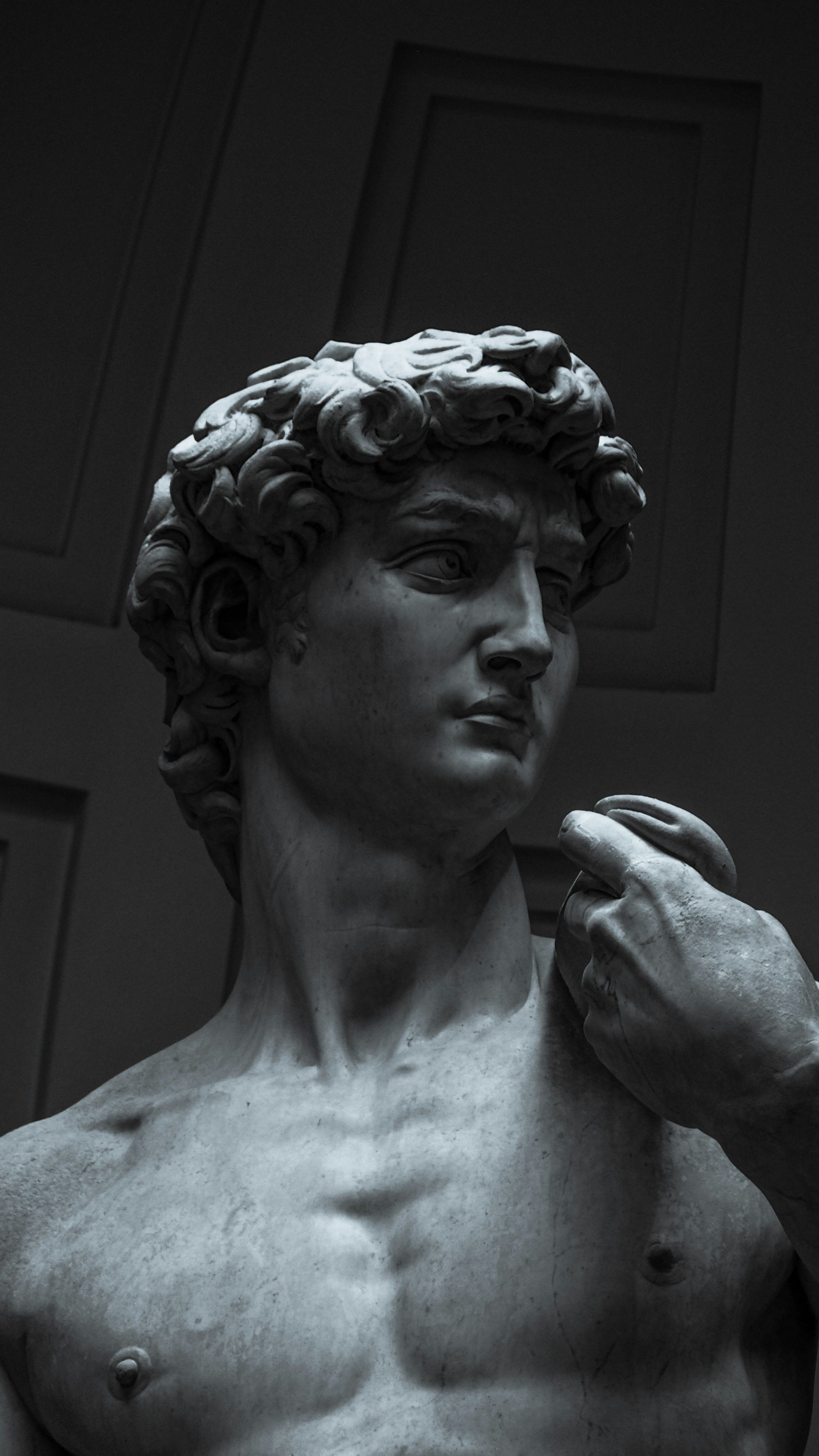
Growing in your understanding of your imago Dei will do you a whole lot better than focusing on boosting self-esteem. —Griffen Gooch
This note arrested me, not because of its novelty, but because of its relevance to my heart. As I have been living these last 30ish years, I have come to revolve my life around two foundational identity factors:
I am an image bearer of God
I am a name bearer of Jesus
That’s it.
Those two alone make up the foundation of my being.
(Thank you Carmen Joy Imes for giving me vocab for this so succinctly.)
Every other modifier has been stacked on those two phrases.
Husband, father, son, pastor, preacher, teacher, writer, friend, mentor, etc. All of them sit on the fact that I am made in God’s image and I am a Christian, a little Christ.
Here is the kicker, though. It is vital that I acknowledge that everyone else is made in the Imago Dei as well. If I don’t, I cannot love God with all my heart, soul, mind, and strength, and I certainly cannot love my neighbor as myself.
I believe this so strongly that it is the core of my message to anyone with whom I have a pastoral conversation. They HAVE to understand they are made in God’s image. That they have worth just for being who they are. That I respect their humanity because I know their creator — he made me too after all.
It is only from there that I can have a conversation about the point of living from that starting truth — to be a name bearer of Jesus. If you want to know a life worth living, arguably to live a life in the fullest sense of being human, it is found in Jesus Christ.
There are many starting lines to life — this one, that removes me from the center, is the one that brings me in line with my Creator, Redeemer, and Sustainer.
If this topic is of interest to you, I will continue below. I am wrapping up my Master’s in Spiritual Formation, and this was a paper that I wrote last year. It might have been a while ago, but I still love this paper. So if this was the only reminder of truth you needed today, thank you for reading! I pray it was an encouragement. For those interested in some more reading — let’s talk about the Imago Dei!
I don’t have a paywall or paid content. But if you are enjoying this writing, consider
An Image Bearer: A reflection on narrative and formation
I am not musical.
People are musical, but I am not. I took seven years of piano, and I could dust up on sight-reading if I needed to. I, however, am not musical. I’ve taken multiple years of guitar, but again, I am not musical. I write poems, not songs, because I am not musical. My dad sang to me and my brother, even though he, and we, are not musical. Ever since I was born, I’ve known — I’m not musical?
I was sitting in conversation with a friend of mine, and he was struck by this. I have spent my whole life around music in one way or another. I wrote dozens of songs (all lost to a hard drive crash) when I was in high school. My friend even took one of my songs and put it to music for our youth group to hear (which to this day is one of my most dear memories). So why didn’t I pursue music somehow? Why didn’t I push past the barrier and continue with the struggle into learning a craft? I would say it’s because of one “truth” I believed.
I am not musical.
Ever since I can remember, my parents have never actively discouraged me from pursuing any hobby or interest, but simultaneously, there is a narrative at work in my family that rings out — we are not a musical family. This common narrative was lived, rather than intentionally taught. Dr. Meg Meeker warns about this in her book to fathers/father figures — “Remember, she is a dry sponge following you around, waiting to see what you think, feel, and do.1” I didn’t verbally receive instruction to not pursue music; rather, I picked up on the narrative at work by watching and listening to my parents live their lives. So despite encouragement to the contrary, I internalized that it was hopeless. Why study for years if I would not be as good as so-and-so with natural talent?
My friend, on the other hand, is the opposite. He was never told he wasn’t musical. He was encouraged to pursue singing, playing guitar, and pushing into musical spaces. He told me, “It would be weird for my family if someone didn’t like music in some way.” We both have very similar lives — loving parents, homeschooled, raised in the church, and encouraged to pursue hobbies and interests. However, the difference here is the lack of one phrase — “we are not musical.” He did not have a background narrative, holding his fingers in hesitancy when he played the keys. When he made a mistake, there wasn’t a narrative in his head saying, “It’s because you have no talent, just quit and do something you’re already good at.” Now, I do not mean to paint a picture that my parents told me this specifically. They were very encouraging of my pursuits and loving to me. However, we always put ourselves down when it comes to music.
So is this a false narrative? Maybe, maybe not, it is technically true in one sense. I truly do not have the natural talent of some of my friends or of my wife. However, I also know now that most of their “talent” came from years of hard work, and it made me think — what other narratives have I been unconsciously letting guide my inner being? What other narratives might be built into my inner self? We often think of telling the truth or telling lies, but when it is a narrative, we actually live them out. “As the psychologist David Benner put it, “It is not so much that we tell lies as that we live them.”2”
Now, while my narrative of not being musical did lead me in a certain direction, it was not so harmful that it has stopped me from having a fulfilling life. It did not stop me from seeking out meaning and living a life that brings value to my community. However, what happens when that is not the case? What happens when the narrative leads to a deeper issue? One that could be foundational to the nature of a human being? What if my primary narrative leads me to wonder about my very existence? About whether I matter or have value, or contribute anything to those around me. What happens when I do not know if I am deserving of being loved and valued? I believe the most central narrative to be addressed is this one: Am I loved?
There are many questions people live to answer. However, I truly believe there is a yearning in all humans to be loved. Philosopher and concentration camp survivor, Viktor Frankl, definitely felt so when he wrote “A thought transfixed me: for the first time in my life I saw the truth as it is set into song by so many poets…that love is the ultimate and the highest goal to which man can aspire…the salvation of man is through love and in love.3” I believe the primary reason behind this is due to the fact of Imago Dei. Being created in God’s image leads to this yearning because of the simple fact that God is love. God is not just love as a feeling but love in community, being triune in nature. Thus, I have a yearning to receive and to give love. My very being was created to be in a community of love by imaging the embodiment of love — God.
David Benner writes, “These core needs, like all core needs, are spiritual - not because love is somehow especially spiritual but because it is a need that ultimately can be met only in God. Our need for love points us toward God.4” When this is not the starting place, as it is not in our culture, you begin from a place of meaninglessness. The most popular belief that we are an accident through evolution is one lacking intentional design. A happy accident for us, but still an unintentional mess to be sure. John Mark Comer puts it this way: “The secular world’s dominant idea (read, working theory of reality) is that human beings are animals, simply aided by time and chance to evolve into the dominant species on our planet … there’s no meaning to life; it’s just a glorious accident.5”
I will explore this topic, one that is deeply personal to me, using a very simple narrative arc found in scripture - Creation (Genesis chapters 1 and 2, Fall (Genesis 3), Redemption (The Gospels of the New Testament). In Genesis, humanity was created in the image of God (Creation). Shortly thereafter, in Genesis, humanity broke relationship with God through intentional disobedience (Fall), and after much time, Jesus Christ came and brought restoration of the relationship through his birth, life, death, and resurrection (Redemption).
Creation — Every human being is an image bearer. If you hold to scripture as truth, this is an indisputable fact. The majority of Christendom is united on this, regardless of differences of belief on how creation happened. “Throughout the ages, Christians have believed that the image of God in which we are created is at the core of who we are and defines us as human.6” So if I do not believe this is the foundational tenet of who I am, how can I live a life true to who I am designed to be? Many spend the majority of their lives asking who they are, but if they are not starting from “I am an image bearer of my creator God,” then they are starting on the wrong foundation. They end up being in need of an identity and are forced to build it for themselves. Alan Noble spoke on this aptly, “the binary tension of existentialism is that on one hand, autonomy grants the individual godlike powers of self-creation, even as on the other hand, autonomy damns the individual to eternal self-preservation.7” This tension, in turn, causes a false self to form, one that demands validation, typically taking the form of self-validation. Which is an oxymoron, as we cannot validate ourselves; we can only find validation in existence in relation to being situated in community. But the false self, once there, is hard to dig out. Thomas Keating says, “The false self is deeply entrenched … as long as you don’t ask it to change, the false self simply adjusts to the new environment … we can convert to the values of the Gospel of Jesus Christ … while our basic attitudes remain the same.8” For years of my life, I was centered not in “I am an image bearer” but “I am a saved sinner.” I did not believe God wanted me as much as he was obligated out of his nature of love to save me. Which leads us to the next part of the narrative …
Fall — Every human being is, from birth, separated in relationship from God. This is not something we choose or make a decision on. It simply is. However, it is not our primary identity. For years, when I primarily positioned myself as a sinner, I was distancing myself from my creator. Living in constant shame. “Shame,” Jon and Tristen Collins write, “is a type of disgust that only humans appear to be capable of: disgust with ourselves. It’s a gut reaction that tells us we are gross, that we should be avoided by others.9” I was constantly heaping on myself the belief that, even though Jesus bridged the chasm between me and God, any slip, any fall, any sin was enough to take me off the path. I cognitively knew God loved me, but I didn’t feel it. I was like the brother-in-Christ that Brother Lawrence wrote about — “He placed his sins between him and God, as it were, telling God that he did not deserve His kindness. But God still continued to bestow them upon him in abundance.10” I felt that I was a broken pot living on borrowed time, and I would just be lucky to reach the end of my days without cracking up any more than I was. I needed to be held together just long enough to survive the shame till I die and be with Jesus. I was, as Jon Tyson and Heather Grizzle say, only living half of the Biblical narrative - “many Christians have been taught only half the story - that we are born sinners and our focus should be on getting ourselves and others to heaven.11” While there can be a healthy shame, typically it is harder to hold that one in mind. Speaking of toxic shame, Strahan Coleman says it is “the kind of shame which, instead of saying ‘I failed, ‘ makes the personal statement ‘I’m a failure.12” and “Healthy shame turns us toward God. Toxic shame beckons us to hide.13”
However, if I change the narrative to be “Image Bearer,” then I see myself as a created being with whom my creator seeks to be reunited. “As Incredible as it sounds, God is interested in you! God longs for your friendship, not simply your compliance.14” I am primarily starting from a position of good, the good being God himself. I was created to reflect light, to reflect goodness, to be with God. Sin does keep me from God, but my inherent worth is there, not by my own merit, but by the merit of my creator, whom I am imaging. I was most definitely in need of salvation, but not due to being created bad, but rather that God’s good creation was broken and separated from him. I desperately needed a savior outside of myself due to my sin to restore me to God’s good presence, where he wanted me. My shame is not the foundational narrative at work; it is a part of me to be sure, but not the platform I stand on before God. I stand as his image bearer. “Although scars of shame are permanent, they are not necessarily fatal.15” This restoration that we have been talking about takes place through the final piece of this three-part narrative arc …
Redemption — Every human being has the opportunity to become a name-bearer by accepting the restoration of relationship offered through Jesus Christ. Jesus offers not a salvation into a foreign land but a restoration of sonship, of a shared inheritance, into God’s kingdom, where we were rightly meant to be placed. God has created us for himself and for himself to be present to. This last step has an element of choice, though. There is an element of being chosen. “Both being the image and bearing the name relate to the concept of election. God has chosen people and given them a job to do.16” A beautiful blend of destiny and decision, where we take the hand offering us rescue from drowning, but we do have to take it. We have to welcome the restoration. If we are image bearers, then this is more restoration than pure foreign salvation. I am not a foreigner outside of God’s family, but one who he has always viewed as meant to be a son, being set in the right place, right relationship with him. From this new layer, built on the foundation of being loved by simply being an image bearer, I can act in response by loving in turn. By being a name-bearer of Jesus, I can be a lover, I can love God, myself, and my neighbor. James KA Smith puts it this way, “Jesus is a teacher who doesn’t just inform our intellect but forms our very loves … to follow Jesus is to become a student of the Rabbi who teaches us how to love.17” Robert Mulholland also explores this furtherance of the image of God by describing it as the image of Christ. “Scripture reveals from the very beginning that human wholeness is associated with the Image of God … The New Testament parallel to this is that we are to become the likeness of Christ, who is the “image of the invisible God” ... The image of Christ will be seen as the ultimate reality of human wholeness.18”
It is here that I reiterate that our greatest desire is to be loved. This desire is most ultimately fulfilled in God himself through the restoration offered in Christ. We deeply thirst for this. We long to be filled with Christ. To be whole. Jesus himself said as much in John 4: “Everyone who drinks of this water will thirst again; but whoever drinks of the water that I will give him will become in him a well of water springing up to eternal life.19” Strahan Coloman says, “To be human is to thirst. To thirst to make whole what feels so unwhole within us.20” We long for fulfillment but constantly battle false narratives that begin our foundation on the wrong truth. We seek to slake our own thirst with affirmations of who we are, all according to ourselves. Then there is even the chance of orienting ourselves to God in the wrong way! It is possible to misunderstand who God is or one’s position before him. Like I did for years and years of my life. So is it hopeless? I would say no. To begin the foundation on the imago dei of our being, and then lay on top of that the covering of Christ, we find completeness. We find wholeness. “The image of Christ is the fulfillment of the deepest hungers of the human heart for wholeness. The greatest thirst of our being is for fulfillment in Christ’s image.21”
What’s fascinating about this is that the Biblical narrative hasn’t changed for me - Creation, Fall, Redemption - but my understanding of my place, my position, within it has changed drastically. I’m an image bearer. I have accepted Jesus’ calling to be a name bearer, to image not just the triune God but the perfect God/Man Jesus Christ. So I have so much more joy in this story of Creation, Fall, and Redemption. It even gives me a greater joy for eternity and to keep eternity before my face. Because now I am not a sinner trying to keep his scorecard clean before the clock runs out. “We are practicing a new freedom, not a new bondage…we fix our eyes upon Jesus, not upon a clock.22” Rather, I keep my mortality before me as a reminder that soon I will be with Jesus, and I have limited time to image Jesus here on this earth. To showcase God’s great grace and love within my imago dei body in the name of Jesus. “My advice, therefore, is to live as if you could die at any moment and to live each day as if it could be your last.23” This calls me to an intense present-ness. To be extremely present to what I am saying, doing, and representing. The beautiful blend of eternity being ever on the mind brings the reality of the present moment sharply. Rather than it being one of cautious fear and dread of sinning, it is one of bold living and imagining my savior. “Here is no discipline in absentmindedness. Walk and talk and work and laugh with your friends. But behind the scenes, keep up the life of simple prayer and inward worship. Keep it up throughout the day. Let inward prayer be your last act before you fall asleep and the first act when you awake.24” By living into my nature as image bearer and my calling as name bearer I am reattaching my desires, my loves to the only one who can satisfy. I can ask along with Jim Wilder and Dallas Willard “is it possible that when God speaks of love, “attachment” is what God means?25” I must seek him, choose him daily, for I can most definitely not choose him. “Though that life is moral and short, it is still a life in which we alone among living beings can stand in opposition to God - in order that we may also choose to stand with God.26”
Thus, we are left with the question. Does it matter what narrative we live? If we desire to be intentional in our spiritual formation, yes, most definitely. If we desire to live in partnership with God, then yes, most definitely. If we desire to reorder our desires to attach to God, then again, yes. For we are all image bearers, this solidifies that we are loved and created with intention and care. We are therefore left to decide, we will complete the picture in Christ. Will we allow his name to be our calling? Will we be name bearers? Will we not just be a created image bearer but intentionally have as our foundation the narrative of being an image bearer of Christ for the glory of God’s kingdom? That is what we are left with, and it is the most important question for our formational journey. One only we can make for ourselves, but the invitation stands, as with the woman at the well - “if you knew the gift of God, and who it is who says to you, “Give me a drink,” you would have asked Him, and He would have given you living water.27” Let us come and be filled, have our thirst slaked, by the living water that satisfies. Let our narrative be founded in truth so we can live truth and be restored into the wholeness only found in Christ.
Meg Meeker MD, Strong Fathers, Strong Daughters: 10 Secrets Every Father Should Know (Regnery, 2017) 84.
John Mark Comer, Live No Lies, (Waterbrook, 2021), 35.
Victor Frankl, Man’s Search for Meaning, trans. Ilse Lasch (Beacon Press, 2006) 37.
David Benner, Desiring God’s Will, (InterVarsity Press,2015) 80.
Comer, Live No Lies 31-32.
Nonna Verna Harrison, God’s Many-Splendored Image (Baker Academic, 2010) 5.
Alan Noble, You Are Not Your Own, (InterVarsity Press, 2021) 84
Thomas Keating, The Human Condition (Paulist Press, 1999) 17
Tristen and Jon Collins, Why Emotions Matter, (Beaumont Press, 2019) 43
Brother Lawrence, The Practice of the Presence of God, In Modern English, trans. Marshall Davis (printed by author, 2013) 14
Jon Tyson & Heather Grizzle, A Creative Minority (Heather Grizzle, 2016) 27
Strahan Coleman, Thirsting (David C Cook, 2024) 183
Coleman, Thirsting 183
Benner, Desiring God’s Will 57
Ronald Rolheiser, Prayer: Our Deepest Longing (Franciscan Media, 2013) 10
Carmen Joy Imes, Bearing God’s Name, Why Sinai Still Matters (InterVarsity Press, 2019) 165
James K.A. Smith, You Are What You Love, (Brazos Press, 2016) 2
Robert Muholland, Invitation to a Journey, (IVP Books, 2016) 20-21
“John 4:13-14” in the NASB Thinline Bible (Zondervan, 2002) 867
Coleman, Thirsting 35
Muholland, Invitation to a Journey 42
Frank Laubach, The Game with Minutes, (Mockingbird Press, 2022) 26
Thomas A Kempis, Meditations on Death, trans. Fr. Robert Nixon, OSB (TAN Books, 2022) 4
Thomas Kelly, A Testament of Devotion (HarperOne, 1992) 12
Jim Wilder, Renovated (NavPress,2020) 6
Dallas Willard, The Spirit of the Disciplines (HarperOne, 1999) 53
“John 4:10” in the NASB Thinline Bible (Zondervan, 2002) 866-867